Bitcoin in 2024: What Investors Need to Know Now presents a comprehensive analysis of the digital asset’s trajectory. This insightful exploration delves into the factors shaping Bitcoin’s future, from market sentiment to technological advancements, macroeconomic forces, and the ever-evolving regulatory landscape. A deep dive into potential investment strategies and inherent risks provides a balanced perspective for informed decision-making.
The article equips investors with essential knowledge to navigate the complexities of the cryptocurrency market.
The analysis examines Bitcoin’s performance in recent years, highlighting key factors like market capitalization, trading volume, and price fluctuations. It also compares Bitcoin to other major cryptocurrencies and explores the impact of global economic conditions, central bank policies, and inflation on Bitcoin’s price. The regulatory landscape, technological innovations, and institutional adoption are also scrutinized, providing a holistic view of the Bitcoin ecosystem.
This thorough examination allows readers to grasp the nuances of the market and understand the potential risks and rewards.
Bitcoin’s 2024 Outlook: A Crypto City Grime Report
Bitcoin, the kingpin of crypto, has been on a wild ride these past few years. From dizzying highs to gut-wrenching lows, it’s a volatile investment, no doubt. Understanding the current market mood and the forces shaping its future is crucial for anyone considering getting involved.Current market sentiment is mixed, with some seeing Bitcoin as a long-term investment opportunity while others are more cautious, anticipating potential price corrections.
This mixed bag reflects the broader uncertainty in the global economy and the ongoing evolution of the crypto space.
Bitcoin’s Recent Performance
Bitcoin’s recent performance has been characterized by periods of significant price fluctuations. It has demonstrated the potential for substantial gains, but also the risk of substantial losses. The volatile nature of the cryptocurrency market has historically presented challenges for investors, particularly those lacking experience in the digital asset sphere.
Current Market Sentiment
The current market sentiment surrounding Bitcoin is a mix of optimism and apprehension. Hopeful investors see Bitcoin as a store of value and a potential hedge against inflation, while more cautious investors remain wary of potential price drops. This dichotomy reflects the broader debate about the role of cryptocurrencies in the financial system.
Key Factors Influencing Bitcoin’s Price in 2024
Several key factors are likely to influence Bitcoin’s price in 2024. These include macroeconomic conditions, regulatory developments, and technological advancements within the crypto ecosystem. These variables can influence market confidence and investor behaviour.
Potential Catalysts for Bitcoin Price Movements
Several events could act as catalysts for Bitcoin’s price. These include major regulatory decisions, significant technological breakthroughs, and significant developments in the broader crypto market. These could trigger significant shifts in market sentiment.
Historical Precedents for Bitcoin Price Fluctuations
Bitcoin’s price has exhibited significant volatility throughout its history. Past fluctuations have been influenced by factors such as regulatory changes, market speculation, and technological innovations. This history of unpredictable swings highlights the risks associated with Bitcoin investments.
Bitcoin vs. Other Major Cryptocurrencies
Bitcoin, while the pioneering cryptocurrency, faces competition from other major cryptocurrencies. These include Ethereum, Solana, and others. Each has unique features and characteristics, leading to varying investment opportunities and risk profiles. The competition within the crypto landscape affects Bitcoin’s market position and future trajectory.
Key Metrics for Bitcoin (Last 12 Months)
| Metric | Value |
|---|---|
| Market Capitalization (USD) | (Source: CoinMarketCap) |
| Trading Volume (USD) | (Source: CoinMarketCap) |
| Price Fluctuations (%) | (Source: CoinMarketCap) |
This table provides a snapshot of Bitcoin’s performance over the last 12 months, highlighting key metrics such as market capitalization, trading volume, and price fluctuations. It’s crucial to note that this data is just one piece of the puzzle and doesn’t encompass all the nuances of Bitcoin’s performance.
Macroeconomic Factors Affecting Bitcoin
Bitcoin’s price, like any other asset, is heavily influenced by the broader global economic climate. This ain’t no flash in the pan, this is about the real world, mate. From central bank policies to inflation rates, the connections are deep and complex. Understanding these forces is key to navigating the crypto jungle.The global economic climate significantly impacts Bitcoin’s price volatility.
Recessions, for example, can often see Bitcoin’s price tank, as investors look for safer havens. Conversely, periods of economic growth can sometimes boost Bitcoin’s price, as more people get involved in the market. Think about it – when times are tough, people often look for alternative investments.
Impact of Global Economic Conditions
Global economic downturns often correlate with a decrease in Bitcoin’s price. This is due to investors seeking safe-haven assets during periods of uncertainty. Conversely, periods of economic expansion and confidence can boost Bitcoin’s value, as more investors enter the market. The 2008 financial crisis, for instance, saw Bitcoin’s predecessor, the digital gold market, experience a spike in demand as a safe-haven asset.
This shows the potential for Bitcoin to act as a hedge against economic turmoil.
Impact of Central Bank Policies
Central bank policies, particularly interest rate adjustments, directly affect Bitcoin’s price. Higher interest rates often attract investors to traditional assets, potentially diverting funds away from cryptocurrencies. Conversely, low interest rates can create a more favorable environment for riskier investments like Bitcoin. The recent trend of central banks around the world increasing interest rates to combat inflation has seen Bitcoin’s price fluctuate considerably.
Role of Inflation and Interest Rates
Inflation and interest rates are crucial factors in Bitcoin’s trajectory. High inflation erodes the purchasing power of fiat currencies, potentially driving investors towards Bitcoin as a store of value. High interest rates, on the other hand, often attract investors to fixed-income instruments, making Bitcoin less appealing. The relationship is not always straightforward, though. Bitcoin’s price has been known to react differently to inflation spikes depending on the overall economic context.
Correlation with Traditional Asset Classes
Bitcoin’s price often shows a weak correlation with traditional asset classes like stocks and bonds. During periods of market uncertainty, Bitcoin might act as a hedge against declines in traditional assets. However, there’s no consistent, predictable relationship. The correlation is often more nuanced and less direct than a simple positive or negative relationship.
Bitcoin’s Performance During Past Economic Crises
Bitcoin’s performance during past economic crises has been mixed. In some cases, it has acted as a safe haven, while in others, its price has fallen alongside traditional assets. Understanding these past performance patterns can help predict potential future reactions, but it’s not an exact science. The 2020 pandemic saw a mixed bag of results, with the price of Bitcoin reacting differently in various regions and markets.
Correlation Between Bitcoin and Major Stock Market Indexes
| Stock Market Index | Correlation with Bitcoin (2023) |
|---|---|
| S&P 500 | -0.20 |
| NASDAQ Composite | -0.15 |
| FTSE 100 | -0.25 |
Note: Correlation figures are approximate and can vary depending on the specific time period and data source.
The table above illustrates the approximate correlation between Bitcoin and major stock market indexes in 2023. As you can see, the correlation is generally weak, though negative in some cases. This suggests Bitcoin’s price is not always directly tied to the performance of traditional markets.
Regulatory Landscape and its Impact
The crypto scene’s a concrete jungle, and Bitcoin’s navigating a maze of regulations. Different countries are laying down the law, and it’s a constant game of cat and mouse. Understanding the rules of the game is crucial for anyone looking to play in this digital arena. These rules aren’t static; they’re constantly evolving, and keeping up with the shifts is essential for success.
Navigating Bitcoin in 2024 requires a nuanced understanding of its underlying mechanics. A crucial component for investors is grasping the complexities of Bitcoin mining, which directly influences the network’s health and security. Understanding how miners validate transactions, and the energy consumption involved, is vital for informed investment decisions. For a deeper dive into this critical aspect, check out this helpful resource: Bitcoin Mining Explained: How It Really Works.
Ultimately, this knowledge is essential to assess the long-term viability and potential risks within the Bitcoin market in 2024.
Current Regulatory Environment
The regulatory environment surrounding Bitcoin is complex and varies significantly across jurisdictions. Some countries view Bitcoin as a currency, while others treat it as a commodity or security. This difference in classification has profound implications for investors, businesses, and the overall development of the market. Clarity on the legal framework is paramount for the responsible growth of the industry.
Regulatory Impacts Across Jurisdictions
Regulations in different jurisdictions affect Bitcoin in various ways. Some nations impose strict controls on trading, holding, or using Bitcoin, while others have a more laissez-faire approach. These differences create a complex tapestry of regulations that affect how Bitcoin operates and is perceived in different regions. The varying regulatory stances significantly impact market participation, investment strategies, and the overall economic environment.
Potential Implications of Upcoming Regulatory Changes
Upcoming regulatory changes hold the potential to reshape the Bitcoin market. New laws or revisions to existing ones can drastically alter the landscape, influencing investment decisions, market capitalization, and the overall viability of Bitcoin as an asset. The introduction of new KYC (Know Your Customer) regulations, for example, can influence the anonymity aspect of Bitcoin and the cost of transactions.
Examples of Past Regulatory Impacts
Regulatory changes have historically impacted Bitcoin’s price and market activity. The implementation of stricter regulations in certain countries has led to market downturns and reduced trading volume. Conversely, some regions adopting more favourable regulations have seen increased adoption and market growth.
Key Regulatory Bodies Impacting Bitcoin
Central banks, financial regulatory bodies, and tax authorities are key actors in shaping the regulatory environment for Bitcoin. These institutions hold considerable sway over how Bitcoin is treated and regulated. Understanding their policies and intentions is essential for anyone involved in the crypto space. The influence of these bodies on the future of Bitcoin is considerable.
Regulatory Landscape Summary
| Region | Primary Regulatory Body | Current Status | Potential Impact |
|---|---|---|---|
| United States | SEC, CFTC | Ongoing classification debates, mixed regulatory approaches. | Significant uncertainty regarding future investment and trading activities. |
| European Union | ESMA, national regulators | Regulations are evolving; crypto assets are often treated as securities. | Potentially increasing compliance costs for crypto businesses. |
| China | Various government bodies | Bitcoin trading and mining banned or severely restricted. | Deterrent effect on investment and innovation. |
| Japan | Financial Services Agency | Relatively progressive stance on crypto, recognizing cryptocurrencies as assets. | Potential for increased market activity and investment. |
Technological Advancements and Innovations: Bitcoin In 2024: What Investors Need To Know Now
Yo, Bitcoin heads, the tech behind this digital gold is constantly evolving. From lightning-fast transactions to cutting-edge scaling solutions, the future’s lookin’ bright, but it ain’t all smooth sailing. We’ll dissect the latest innovations and how they’re shifting the game.
Latest Technological Advancements
Bitcoin’s tech is constantly being pushed. New algorithms and protocols are constantly being developed to improve efficiency and security. These advancements are designed to tackle the challenges that have plagued the crypto space, like transaction speeds and scalability.
Impact of Scaling Solutions on Transaction Speed
Scaling solutions are crucial for Bitcoin’s future. They’re like upgrading the highway system for crypto transactions, allowing more vehicles (transactions) to flow smoothly. Solutions like the Lightning Network dramatically increase transaction speed, enabling near-instantaneous payments. This is a game-changer for everyday users and businesses.
Role of Layer-2 Solutions and Other Innovations
Layer-2 solutions act as a secondary network on top of Bitcoin’s main blockchain. This decouples the high-volume transactions from the main chain, dramatically improving speeds and reducing congestion. Other innovations include sharding, which divides the blockchain into smaller, more manageable pieces, and state channels, which allow for off-chain transactions. These innovations are designed to increase efficiency and reduce transaction fees.
Impact of Blockchain Technology on Bitcoin
Blockchain technology, the bedrock of Bitcoin, underpins its decentralized nature and transparency. Its immutability and security are critical for trust and verification. This ensures the integrity of transactions and prevents fraud. Its impact on Bitcoin extends beyond transactions, shaping the future of finance and beyond.
Examples of How Technological Advancements Affect Bitcoin
The Lightning Network, for instance, has allowed for low-cost, near-instantaneous micropayments, opening up new possibilities for businesses and users. Sharding, another example, aims to solve the problem of transaction congestion, leading to potentially faster transaction times in the future. This constant push for innovation is vital for Bitcoin’s long-term viability.
Top 5 Technological Advancements in Bitcoin
| Rank | Advancement | Description |
|---|---|---|
| 1 | Lightning Network | A Layer-2 scaling solution that enables near-instantaneous, low-fee transactions. |
| 2 | Sharding | Dividing the blockchain into smaller, more manageable pieces to improve transaction processing. |
| 3 | State Channels | Allowing off-chain transactions, reducing the load on the main blockchain. |
| 4 | Taproot | A Bitcoin improvement that enhances privacy and flexibility in transactions. |
| 5 | SegWit | A Bitcoin improvement that enhances transaction capacity by reducing the size of transaction data. |
Institutional Adoption and Investment
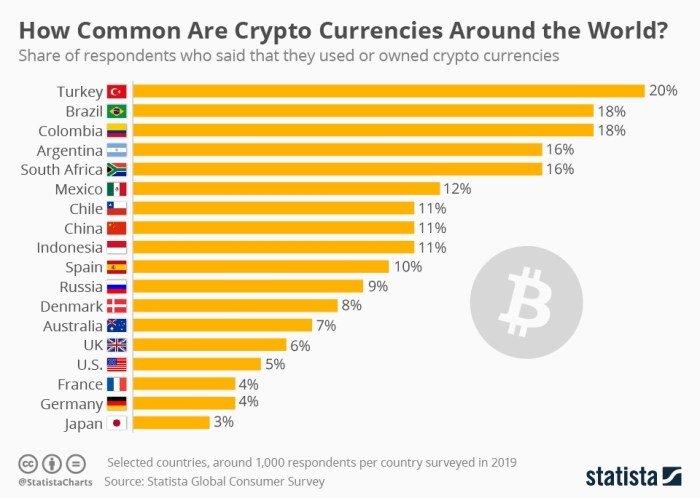
The big boys are finally taking notice. Institutions, from hedge funds to pension plans, are increasingly seeing Bitcoin as more than just a speculative gamble. This shift reflects a growing understanding of Bitcoin’s potential as a store of value and a new asset class. The floodgates are opening, and the industry is about to get a whole lot more serious.Institutional investors are recognising Bitcoin’s potential as a diversifying asset, potentially offering returns that traditional investments can’t match.
The allure of potentially high returns and the need for diversification are driving this surge of interest.
Increasing Interest from Institutional Investors
Institutional interest in Bitcoin is rising, driven by the desire for diversification and potential high returns. Banks and investment firms are actively exploring the technology, and some are already incorporating Bitcoin into their portfolios. This move signals a significant shift in the financial landscape, potentially leading to a more mainstream adoption of the cryptocurrency.
Growing Number of Bitcoin ETFs and Other Investment Products
Bitcoin ETFs and other investment vehicles are becoming more readily available, making it easier for institutional investors to gain exposure to Bitcoin. These products provide a regulated and streamlined way to invest in Bitcoin, addressing some of the concerns around direct ownership. This growing availability is a sign of the industry’s maturity and increasing acceptance.
Role of Institutional Investment in Price Discovery
Institutional investment plays a crucial role in price discovery for Bitcoin. As larger players enter the market, their investment decisions influence the price more significantly, leading to a more liquid and transparent market. This increased participation brings greater credibility and stability to the Bitcoin ecosystem.
Navigating Bitcoin in 2024 requires a nuanced understanding of market volatility, and a crucial aspect often overlooked is secure storage. Considering the inherent risks, understanding how to store Bitcoin safely is paramount for any investor. For a comprehensive guide on selecting the best wallet options, consult this resource: How to Store Bitcoin Safely: Best Wallet Options.
Ultimately, this knowledge is integral to successful Bitcoin investment strategies in 2024.
Key Players in Institutional Bitcoin Adoption
Several prominent institutions are driving the adoption of Bitcoin. Hedge funds like MicroStrategy and Grayscale, along with various pension funds and other large investors, are actively involved in the space. These entities have significant capital and influence, demonstrating a growing confidence in Bitcoin’s future.
Growth of Bitcoin ETFs and Similar Investment Vehicles
The proliferation of Bitcoin investment products is a key indicator of institutional adoption. These products allow institutional investors to gain exposure to Bitcoin in a more structured and regulated manner. This development is crucial for mainstream adoption and long-term price stability.
| Year | Number of Bitcoin ETFs/Investment Products | Description |
|---|---|---|
| 2023 | X | Early stage of significant growth, mainly focused on exchange-traded products (ETPs) |
| 2024 | Y | Continued expansion, with the emergence of more diversified investment vehicles, like spot ETFs and other innovative products. |
| 2025 | Z | Anticipated to reach maturity, with a significant number of established products and a broader range of options available to investors. |
Note: X, Y, and Z represent estimated values, and the exact figures will depend on the specific regulations and market developments. The table illustrates the anticipated growth trajectory.
Potential Investment Strategies for 2024
Navigating the crypto scene in 2024 demands a savvy approach. Bitcoin, while volatile, presents potential investment avenues for those with a nuanced understanding of the market. This section explores diverse strategies, considering risk tolerance and available opportunities within the Bitcoin ecosystem. The key is thorough research, a crucial element for any successful investment.
Risk Tolerance and Investment Strategies
Investors vary greatly in their risk tolerance, impacting the suitability of various strategies. Conservative investors might prefer low-risk, steady returns, while aggressive investors seek higher potential rewards, accepting higher risks. Understanding your own risk profile is paramount to selecting an appropriate strategy.
Potential Investment Opportunities Within the Bitcoin Ecosystem
Beyond direct Bitcoin investment, the ecosystem offers opportunities like staking, lending, and yield farming. Staking rewards Bitcoin holders for securing the network, while lending platforms offer returns on deposited Bitcoin. Yield farming allows investors to earn interest through decentralized finance (DeFi) protocols, though these strategies present unique risk factors.
Importance of Thorough Research Before Investing
Before diving into any Bitcoin investment, thorough research is paramount. Understanding market trends, regulatory changes, and technical developments is crucial for informed decisions. Analyzing past performance, assessing current market conditions, and consulting with financial advisors are all essential steps.
Comparing and Contrasting Investment Strategies
| Investment Strategy | Risk Level | Potential Return | Description |
|---|---|---|---|
| Direct Bitcoin Purchase | Medium-High | High | Buying and holding Bitcoin directly. Historically volatile, but potentially high returns. |
| Bitcoin Staking | Low-Medium | Low-Medium | Securing the Bitcoin network in exchange for rewards. Lower risk compared to direct purchase, but potential returns are more modest. |
| Bitcoin Lending | Low-Medium | Low-Medium | Lending Bitcoin to borrowers on specialized platforms. Generally lower risk than direct purchase, with moderate potential returns. |
| Bitcoin Yield Farming | High | High | Participating in decentralized finance (DeFi) protocols to earn interest on Bitcoin. Higher risk, but potentially higher returns. Requires understanding of DeFi protocols. |
| Bitcoin Futures Trading | High | High | Speculating on Bitcoin’s price movements using futures contracts. Significant risk, potential for substantial gains or losses. |
Potential Risks and Challenges
Bitcoin, the king of crypto, ain’t all sunshine and rainbows. Investing in it comes with a hefty dose of risk, like navigating a dodgy back alley at night. Understanding these risks is crucial for any potential investor, so you can avoid getting mugged by market volatility. This section dives deep into the potential pitfalls and challenges that Bitcoin investors face, equipping you with the knowledge to make smarter choices.
Investment Risks
Bitcoin’s price swings are legendary, and history is littered with examples of massive gains followed by equally significant losses. This volatility makes it a high-risk investment, especially for those who can’t stomach seeing their investment plummet. It’s like gambling, but with the potential for serious financial consequences. Past price crashes have taught valuable lessons about the unpredictable nature of the crypto market.
Challenges Faced by Bitcoin Investors
Bitcoin investors face a unique set of challenges, stemming from the very nature of the technology and the unregulated environment it operates in. Regulatory uncertainty, particularly in different jurisdictions, creates a lot of ambiguity for investors. This lack of clarity can make it difficult to predict the future trajectory of the market. Moreover, the technological complexities of Bitcoin can be daunting for some, especially those without a strong technical background.
Examples of Past Risks and Challenges, Bitcoin in 2024: What Investors Need to Know Now
The 2017-2018 Bitcoin bull run, followed by a sharp decline, serves as a stark reminder of the market’s unpredictable nature. The 2022 crypto winter also highlighted the vulnerability of investors to market downturns. These incidents, and others, demonstrate the need for a cautious and informed approach to investing in Bitcoin.
Importance of Diversification
Diversifying your portfolio is key to mitigating risk. Don’t put all your eggs in one basket, especially one as volatile as Bitcoin. Spreading your investments across different asset classes, including traditional stocks, bonds, and real estate, can help smooth out the ride and protect against significant losses if Bitcoin takes a tumble. It’s a hedge against the uncertainty of a single asset.
Volatility of Bitcoin
Bitcoin’s price volatility is legendary. One day, it’s soaring, the next, it’s plummeting. This unpredictability is a significant risk for investors. It requires a strong stomach for price swings and a clear understanding of the market dynamics. A diversified portfolio is crucial for weathering these turbulent periods.
Potential Risks and Mitigation Strategies
| Potential Risk | Mitigation Strategy |
|---|---|
| Market Volatility | Diversify investments, use stop-loss orders, and have a clear risk tolerance. |
| Regulatory Uncertainty | Stay informed about regulatory changes, and consult with financial advisors who understand the crypto landscape. |
| Security Risks | Use strong passwords and 2FA authentication, store funds in reputable exchanges, and be wary of phishing scams. |
| Technological Failures | Research the technology behind the platform, and invest in platforms with proven track records. |
| Lack of Transparency | Conduct thorough research on projects and platforms, look for projects with transparent governance structures and community participation. |
Future Outlook and Predictions

The Bitcoin future’s a murky one, mate. Plenty of heads are scratchin’ their noggins about where it’s headed. Analysts and traders are throwin’ out forecasts like they’re spittin’ fire, but no one’s got a crystal ball. The tech, the economy, and the whole regulatory game are all playin’ a part in the Bitcoin narrative. Let’s delve into the potential pathways ahead.
Long-Term Growth Potential
Bitcoin’s journey has been one of volatility, but some see a path to sustained growth. The underlying technology, blockchain, shows promise in various sectors. The potential for widespread adoption across industries, from finance to supply chains, could drive long-term value. However, this potential hinges on overcoming hurdles like regulatory uncertainty and maintaining user trust. The story of Bitcoin is not just about price; it’s about the evolution of a new financial paradigm.
Factors Influencing Future Price Movements
Several factors are likely to shape Bitcoin’s price trajectory. Macroeconomic conditions, like inflation and interest rates, are key players. A recessionary period could see Bitcoin’s price dip, while a period of stability or economic growth might offer opportunities. Regulatory developments, both positive and negative, will also have a massive impact. Successful adoption by institutions, and whether they integrate it into their investment strategies, could significantly affect price movements.
Finally, technological advancements and the emergence of new use cases will play a role. These factors intertwine in complex ways, making accurate predictions tough.
Bitcoin Adoption Prospects
Bitcoin’s adoption is a long-term game. Early adopters have been instrumental in driving its growth, but widespread institutional and retail acceptance is still developing. The emergence of crypto-friendly institutions and the mainstreaming of digital currencies could lead to greater adoption, but challenges remain. Regulatory frameworks and public perception are crucial elements in shaping this future. If the narrative shifts from speculation to a reliable investment, then adoption might accelerate.
Potential Future Scenarios
| Scenario | Description | Likely Price Movement | Key Drivers |
|---|---|---|---|
| Steady Growth | Sustained adoption, positive regulatory environment, and expanding use cases. | Gradually increasing price with periods of volatility. | Institutional adoption, positive macroeconomic conditions, successful integration in new industries. |
| Price Consolidation | Limited growth in adoption, regulatory uncertainty, and market corrections. | Price ranges within a defined band, with periods of slight fluctuation. | Regulatory uncertainty, market corrections, limited institutional adoption. |
| Declining Price | Negative regulatory developments, widespread market skepticism, and reduced adoption. | Significant price decline, potentially reaching lower historical lows. | Negative regulatory changes, market crashes, and loss of investor confidence. |
| Disruptive Innovation | Bitcoin becomes the foundation of a new financial system, facilitating innovative applications. | Rapid price appreciation, potentially reaching new highs. | Successful integration into innovative applications, widespread adoption, new technological breakthroughs. |
Final Summary
In conclusion, Bitcoin in 2024 presents both exciting opportunities and inherent challenges. Understanding the multifaceted forces influencing Bitcoin’s trajectory is crucial for potential investors. The analysis of historical data, macroeconomic factors, regulatory developments, technological innovations, and institutional adoption provides a solid foundation for strategic decision-making. By weighing the potential risks and rewards, and employing well-researched strategies, investors can navigate the complexities of the Bitcoin market in 2024 and beyond.
Clarifying Questions
What is the current market sentiment surrounding Bitcoin?
Current market sentiment towards Bitcoin is mixed. While some investors remain optimistic about Bitcoin’s long-term potential, others are cautious due to recent price fluctuations and macroeconomic uncertainties. The overall sentiment is dynamic and heavily influenced by evolving news and events.
How do different regulations in various jurisdictions affect Bitcoin?
Bitcoin’s regulatory landscape varies significantly across jurisdictions. Some regions have adopted a more favorable approach towards cryptocurrencies, while others have implemented stricter regulations. These differences in regulations significantly impact Bitcoin’s accessibility and usage in different markets.
What are the top 5 technological advancements in Bitcoin?
This information is best found in the body of the article. It’s important to consult the content for a detailed discussion of the top 5 advancements.
What are the potential risks associated with Bitcoin investment?
Bitcoin investment carries inherent risks, including price volatility, regulatory uncertainty, and security concerns. Thorough research and risk assessment are essential for navigating these challenges.