With The Future of Bitcoin: Trends and Predictions at the forefront, this analysis delves into the multifaceted landscape surrounding Bitcoin’s trajectory. From emerging blockchain technologies to market trends and regulatory frameworks, the discussion scrutinizes potential impacts on Bitcoin’s role as a store of value, its integration into finance, and the crucial environmental considerations. The examination extends to security and privacy concerns, offering a comprehensive, yet critical, overview.
The provided Artikel details various facets of Bitcoin’s future, encompassing technological advancements, market adoption, its potential as a store of value, its role in the future of finance, environmental sustainability, and security/privacy. The analysis utilizes tables to present comparative data and trends, adding depth to the discussion. However, the Artikel lacks specific predictions and nuanced insights, instead focusing on potential impacts and trends.
Technological Advancements
Right, so the Bitcoin scene’s about to get wild with all these newfangled blockchain technologies. We’re talkin’ serious upgrades, not just some tweaks. These advancements could either make Bitcoin the king of the digital realm or leave it in the dust. Let’s dive into the potential game-changers.
Emerging Blockchain Technologies
Blockchain tech is evolving at warp speed. We’re seeing new types popping up, each with its own unique approach to security and scalability. These new entrants could significantly alter the Bitcoin landscape, potentially making it more robust or more vulnerable. The key here is understanding how these new systems interact with Bitcoin’s current infrastructure.
Cryptography Advancements
Cryptographic improvements are crucial for Bitcoin’s security. Think stronger encryption algorithms, making it harder for hackers to crack Bitcoin’s code. For example, elliptic curve cryptography (ECC) offers better security compared to traditional methods. This enhanced security is essential for maintaining Bitcoin’s reputation as a trustworthy digital asset. Quantum computing poses a serious threat, though, and Bitcoin needs to adapt.
Consensus Mechanism Innovations
Consensus mechanisms, like Proof-of-Work (PoW) used by Bitcoin, are essential for validating transactions. New mechanisms like Proof-of-Stake (PoS) are emerging, promising faster transaction speeds and reduced energy consumption. The move towards more efficient consensus mechanisms could dramatically alter Bitcoin’s operational efficiency and its environmental footprint.
Future Applications Beyond Cryptocurrency
Bitcoin isn’t just for buying lattes anymore. We’re seeing potential applications in supply chain management, digital identity, and even micropayments. Imagine using Bitcoin to track the journey of a product from farm to fork, or to verify your digital identity securely. These new uses could revolutionize various industries.
Quantum Computing’s Impact
Quantum computing presents a significant threat to Bitcoin’s current security. Quantum computers have the potential to break the encryption algorithms currently securing Bitcoin’s transactions. Countermeasures include exploring post-quantum cryptography, which is resistant to attacks from quantum computers. This is a serious challenge, but a necessary one for Bitcoin’s long-term survival.
Blockchain Technology Impact Table, The Future of Bitcoin: Trends and Predictions
| Technology | Description | Potential Impact on Bitcoin | Timeline Estimates |
|---|---|---|---|
| Sharded Blockchains | Dividing the blockchain into smaller, more manageable parts to increase transaction speed and scalability. | Increased transaction throughput and reduced block times. Could lead to more widespread adoption in high-volume transaction environments. | 5-10 years (implementation and widespread adoption) |
| Layer-2 Scaling Solutions | Adding a secondary layer to the blockchain to process transactions off-chain, improving transaction speed and reducing congestion on the main chain. | Potentially significant improvements in transaction speed and fees. May lead to more use cases for Bitcoin in daily transactions. | 2-5 years (widespread implementation) |
| Zero-Knowledge Proofs | Allowing for verification of information without revealing the underlying data. | Increased privacy and security for Bitcoin users. Potential for new applications in decentralized finance (DeFi). | 3-7 years (maturity and mainstream adoption) |
| Optimistic Rollups | Batching transactions off-chain and applying them to the main blockchain in a single step, improving scalability. | Improved transaction throughput and reduced transaction fees, potentially making Bitcoin more accessible for mass adoption. | 3-5 years (widespread adoption) |
Market Trends and Adoption

Right, so, Bitcoin’s price and adoption are massively influenced by a bunch of factors. It’s not just about tech anymore; the whole market’s buzzing with institutional interest, regulatory hurdles, and global adoption. We need to see how these things are shaping the future of the coin.Current market trends are pretty complex. Volatility is a constant, and speculative trading still plays a huge role.
However, the increasing institutional interest is a major shift. This is pulling the market in a direction beyond the typical pump-and-dump cycles, and we’re seeing a more serious, long-term investment perspective.
Institutional Investors’ Role
Institutional investors, like pension funds and hedge funds, are entering the crypto scene in a big way. Their entry signals a shift from individual speculation to a more substantial, established form of investment. This influx of capital can significantly impact price stability and adoption rates, making it less susceptible to the wild swings of the past. For example, BlackRock’s recent foray into crypto-related products is a prime example of this trend.
Regulatory Frameworks’ Impact
Different jurisdictions are handling Bitcoin regulation in vastly different ways. Some regions are embracing it cautiously, while others are outright hostile. The regulatory environment directly affects adoption rates. Clear and consistent regulations are crucial for fostering trust and legitimacy in the market, attracting institutional investment and promoting widespread adoption. For example, some countries have specific tax laws for crypto assets, while others have no clear framework, leaving businesses and investors unsure about their obligations.
This uncertainty deters adoption in many cases.
Global Adoption Trends
Global adoption of Bitcoin is increasing, though unevenly. Different market segments are driving this growth. For instance, the fintech sector is heavily integrating Bitcoin into their services, leading to a wider acceptance among consumers. Developing nations are also showing a strong interest, as Bitcoin can offer financial inclusion and circumvent traditional banking systems. This is something that’s especially relevant in regions with underdeveloped financial infrastructures.
Regulatory Landscape Comparison
| Region | Regulations | Impact on Adoption | Future Outlook |
|---|---|---|---|
| United States | Mixed, with ongoing legislative debates. | Uncertainty and volatility in adoption. | Potential for clearer regulations, but the pace is slow. |
| European Union | Developing frameworks for cryptoassets. | Slow, cautious adoption as investors await clarity. | Increased regulation is expected, and this will shape adoption. |
| China | Highly restrictive, effectively banning crypto transactions. | Zero adoption for most businesses and individuals. | Likely to remain a closed market. |
| Japan | Relatively supportive regulatory environment. | Higher adoption rates compared to other regions. | Continued positive regulatory environment. |
“The regulatory environment significantly impacts the perception of Bitcoin’s legitimacy and safety. Clear regulations attract institutional investment and encourage wider adoption.”
The future of Bitcoin, with its fluctuating trends and predictions, presents both exciting opportunities and inherent complexities. Navigating these uncertainties requires a keen understanding of market dynamics, and while exploring such intricate financial landscapes, it’s also prudent to consider the role of a skilled advocate like an aggressive insurance lawyer who knows how to win big. Aggressive Insurance Lawyer Who Knows How to Win Big can offer valuable insights into mitigating potential risks.
Ultimately, understanding the future of Bitcoin involves a multifaceted approach, balancing risk assessment with informed financial strategies.
Bitcoin’s Potential as a Store of Value
Right, so, Bitcoin’s potential as a store of value is a hot topic. It’s not just about its price fluctuations; it’s about whether it can actually act like gold or other traditional assets, offering a safe haven during economic storms. This section delves into the comparison, potential inflation hedges, and the factors influencing its value.Bitcoin’s appeal as a store of value stems from its scarcity, decentralised nature, and perceived resilience to traditional financial systems.
However, like any asset, its value is influenced by market forces, and its track record as a stable store of value is still relatively short.
Comparison to Traditional Assets
Bitcoin’s potential as a store of value is often compared to traditional assets like gold and government bonds. These assets have historically served as safe havens during periods of economic uncertainty and inflation. However, Bitcoin differs significantly in its underlying technology and operational mechanisms. The unique characteristics of Bitcoin, including its limited supply and decentralised nature, create both opportunities and challenges in its role as a store of value.
Hedging Against Inflation and Economic Uncertainty
Bitcoin’s proponents argue that its limited supply makes it a potential hedge against inflation. As the money supply increases, the value of fiat currencies may decrease, potentially leading to inflation. Bitcoin, with a fixed supply of 21 million coins, theoretically resists this inflationary pressure. However, this theory is not universally accepted, and Bitcoin’s price volatility can still significantly impact its effectiveness as a hedge.
Factors Influencing Bitcoin’s Value as a Store of Value
Several factors could influence Bitcoin’s value as a store of value, including regulatory developments, technological advancements, and market sentiment. Government regulations regarding cryptocurrency can drastically affect adoption and investment confidence. Furthermore, innovations in blockchain technology and the wider adoption of cryptocurrencies can also impact its value proposition. The overall market sentiment and investment activity, driven by factors like investor confidence and media coverage, are crucial drivers.
Intrinsic Value and Future Price Movements
The concept of Bitcoin’s intrinsic value is a complex one. Unlike traditional assets with inherent physical properties or tangible value, Bitcoin’s value is largely determined by market forces. The perceived utility, scarcity, and security of the network contribute to its perceived value. Ultimately, the future price movements of Bitcoin will depend on a complex interplay of these factors and the overall market dynamics.
While some believe in its potential as a store of value, others view it as a speculative asset.
Characteristics of Bitcoin as a Store of Value
| Characteristic | Bitcoin | Gold |
|---|---|---|
| Value | Derived from market forces, network security, and perceived utility | Derived from scarcity, historical use as a store of value, and industrial applications |
| Security | Protected by cryptography and distributed ledger technology; vulnerable to hacking and network attacks | Physical form, relatively secure from manipulation; vulnerable to theft and loss |
| Liquidity | Highly volatile; varies significantly across exchanges and jurisdictions | Relatively liquid; widely traded on exchanges and in physical markets |
| Global Acceptance | Growing but not universal; limited acceptance in many mainstream financial systems | Widely accepted globally; used in international transactions and financial markets |
Bitcoin’s Role in the Future of Finance

Bitcoin’s potential to reshape the financial landscape is a hot topic amongst the crypto-heads. From its disruptive potential to shake up traditional finance to its role in decentralized finance, the implications are massive. This section dives deep into Bitcoin’s integration with the wider financial ecosystem, exploring its capacity to disrupt established norms and the exciting emergence of decentralized finance.Bitcoin’s integration into the mainstream financial system is a complex process, but not impossible.
Its potential to facilitate faster, cheaper, and more transparent cross-border transactions is undeniable. Think of the ripple effect this could have on international trade and remittances. However, regulatory hurdles and public acceptance remain significant obstacles.
Bitcoin’s Integration into the Broader Financial System
Bitcoin’s integration into traditional finance hinges on its ability to prove its reliability and security. Currently, a major hurdle is overcoming the volatility associated with Bitcoin’s price fluctuations. This volatility could be mitigated through more stable, institutional-grade solutions. Some experts predict the creation of Bitcoin-backed stablecoins to achieve this stability.
Potential Disruption of Traditional Financial Institutions
Bitcoin’s decentralized nature challenges the very foundation of traditional financial institutions. These institutions, often plagued by bureaucracy and high transaction fees, could face significant competition from Bitcoin’s streamlined, peer-to-peer network. This disruption is not guaranteed, however, as adoption and regulatory challenges remain.
Decentralized Finance (DeFi) and its Relationship with Bitcoin
Decentralized finance (DeFi) leverages blockchain technology, including Bitcoin’s underlying technology, to create financial services without intermediaries. This eliminates the need for traditional banks and allows for greater financial inclusion. Bitcoin’s role in DeFi is multifaceted, serving as a store of value and potentially a medium of exchange within these platforms. The potential for this relationship to reshape lending, borrowing, and other financial instruments is enormous.
Revolutionizing Cross-Border Transactions
Bitcoin’s potential to revolutionize cross-border transactions is compelling. Imagine instant, low-cost transfers without relying on intermediaries. This could be transformative for remittances and international trade. The current challenge lies in overcoming regulatory hurdles and fostering trust and security in these cross-border operations.
Bitcoin in the Future of Finance: Use Cases
| Use Case | Description | Potential Impact | Challenges |
|---|---|---|---|
| Cross-border payments | Facilitating fast, low-cost international transactions. | Increased efficiency, reduced costs for businesses and individuals involved in international trade. | Regulatory compliance and maintaining transaction security. |
| Micro-payments | Enabling small-value transactions, particularly for digital content and services. | Enabling new business models and greater financial inclusion for marginalized communities. | Scalability of the Bitcoin network and the need for user-friendly payment solutions. |
| Decentralized lending and borrowing | Enabling peer-to-peer lending and borrowing platforms using blockchain technology. | Increased access to capital, potentially displacing traditional financial institutions. | Security of digital assets and regulatory scrutiny. |
| Investment and asset management | Creating new investment opportunities and asset management services using Bitcoin. | Offering greater diversification and potential returns to investors. | Market volatility and the need for robust risk management strategies. |
Environmental Sustainability

Bitcoin’s meteoric rise has brought about a crucial debate: its environmental impact. The energy-intensive nature of Bitcoin mining is a significant concern, raising eyebrows among academics and the public alike. This section delves into the energy consumption conundrum, potential solutions, and the role of sustainable blockchain technologies in mitigating the environmental footprint.
Bitcoin’s Energy Consumption and Environmental Impact
Bitcoin mining, the process of validating transactions and adding them to the blockchain, requires substantial computational power. This process consumes vast amounts of electricity, primarily from fossil fuel sources in many regions. The resultant carbon emissions contribute to climate change, a pressing global issue. Furthermore, the fluctuating energy demand associated with Bitcoin mining can strain local grids and potentially destabilize power supplies.
Potential Solutions to Address Bitcoin’s Environmental Concerns
Several avenues exist to tackle Bitcoin’s environmental impact. Transitioning to renewable energy sources, like solar and wind power, for mining operations is a key strategy. Implementing more energy-efficient mining algorithms is another promising approach. These solutions, while not a panacea, can demonstrably reduce Bitcoin’s carbon footprint.
Role of Sustainable Blockchain Technologies in Mitigating Bitcoin’s Environmental Footprint
Sustainable blockchain technologies aim to minimize energy consumption during the transaction verification process. Proof-of-stake (PoS) consensus mechanisms, for instance, are less energy-intensive than the current Proof-of-Work (PoW) model used by Bitcoin. This shift could significantly reduce the environmental impact of the cryptocurrency ecosystem.
Comparison of Bitcoin Mining Methods and Their Environmental Impact
| Mining Method | Energy Consumption (estimated in kWh/transaction) | Environmental Footprint (estimated carbon emissions per transaction in kg CO2e) | Sustainability Initiatives |
|---|---|---|---|
| Proof-of-Work (PoW) | High (varies significantly by hardware and region) | High (correlated with energy consumption) | Transition to renewable energy, development of more efficient hardware, algorithm optimization |
| Proof-of-Stake (PoS) | Low (significantly less than PoW) | Low (correlated with energy consumption) | Wide adoption across various blockchain projects, potentially leading to widespread energy savings |
| Hybrid Models | Intermediate (combination of PoW and PoS) | Intermediate (depending on the proportion of PoW and PoS in the model) | Exploration of models that balance security and sustainability, potential for optimized energy consumption |
The table above provides a simplified comparison. Actual figures vary greatly depending on the specific hardware, electricity costs, and geographical location of the mining operations. Further research and analysis are necessary to quantify these impacts accurately.
Security and Privacy Concerns: The Future Of Bitcoin: Trends And Predictions
Right, so Bitcoin’s decentralised nature, while cool, presents some serious security challenges. It’s like a digital wild west, and users gotta be extra careful to avoid getting robbed. The lack of a central authority means there’s no one to bail you out if things go pear-shaped. This makes robust security practices absolutely crucial for anyone playing in the Bitcoin game.The potential for hacking and fraud is a major concern, and these threats are constantly evolving.
Think about sophisticated phishing scams or exploits targeting vulnerabilities in Bitcoin wallets and exchanges. Users need to be vigilant and understand the risks to avoid losing their hard-earned crypto.
Primary Security Threats to Bitcoin
Bitcoin’s decentralized nature, while innovative, exposes it to numerous security risks. These include vulnerabilities in wallet software, the risk of phishing scams, and the threat of 51% attacks. Furthermore, the anonymity associated with Bitcoin can attract malicious actors seeking to exploit loopholes and conduct illicit activities.
Potential for Hacking and Fraud in the Bitcoin Ecosystem
Hacking and fraud pose a significant threat to Bitcoin users. Sophisticated phishing campaigns can trick users into revealing their private keys, leading to complete account loss. Exchanges, often the entry point for many, are also prime targets. These exploits can result in massive financial losses for both individual investors and institutions. Furthermore, exploits targeting vulnerabilities in wallet software or the underlying blockchain itself can lead to significant financial losses.
While the future of Bitcoin remains uncertain, with various predictions emerging, it’s important to consider practical matters. Navigating the complexities of financial situations, like claim delays, can be challenging. Fortunately, Claim Delays Are Over! Insurance Lawyer for Quick Payouts offers a supportive solution for streamlined insurance claim processes, which can offer peace of mind. Ultimately, understanding both the financial and legal aspects will contribute to a more comprehensive perspective on the future of Bitcoin and its evolving role in the financial world.
Importance of Robust Security Measures for Bitcoin Users
Strong security measures are paramount for Bitcoin users. This includes using strong, unique passwords for wallets and accounts, enabling two-factor authentication (2FA) wherever possible, and regularly updating software to patch vulnerabilities. Users should be cautious about clicking on suspicious links or downloading untrusted files, as these can lead to malware infections. Ultimately, understanding the threats and implementing appropriate security measures is key to safeguarding your digital assets.
Role of Privacy-Enhancing Technologies in Safeguarding Bitcoin Users
Privacy-enhancing technologies (PETs) can play a crucial role in bolstering Bitcoin user security. These technologies, like coin mixers or privacy-focused wallets, can obfuscate transaction details, making it harder for malicious actors to track Bitcoin activity. However, these methods aren’t foolproof, and their effectiveness varies depending on the specific implementation. The use of these technologies requires a nuanced understanding of their strengths and weaknesses, as misuse can lead to unintended consequences.
Security Protocols for Bitcoin Wallets
Implementing robust security protocols is essential for protecting Bitcoin wallets. These protocols offer varying degrees of protection against different types of attacks. The effectiveness of a protocol hinges on factors such as the implementation and user adherence to security best practices.
| Protocol | Description | Strengths | Weaknesses |
|---|---|---|---|
| Cold Storage | Storing Bitcoin offline, typically on a hardware wallet. | High security against online attacks. | Requires physical security and potential for loss or theft. |
| Two-Factor Authentication (2FA) | Adding a second layer of security beyond a password. | Significantly enhances security by requiring an additional verification step. | Reliance on the security of the authentication method and potential for phishing attacks. |
| Multi-Signature Wallets | Requiring multiple signatures to authorize transactions. | Increased security against single point of failure. | Complexity in management and potential for compromise if a signer is compromised. |
| Wallet Software Updates | Regular updates to patch vulnerabilities. | Mitigation of known exploits and vulnerabilities. | Potential for bugs in updates and the need for user diligence in applying them. |
Conclusion
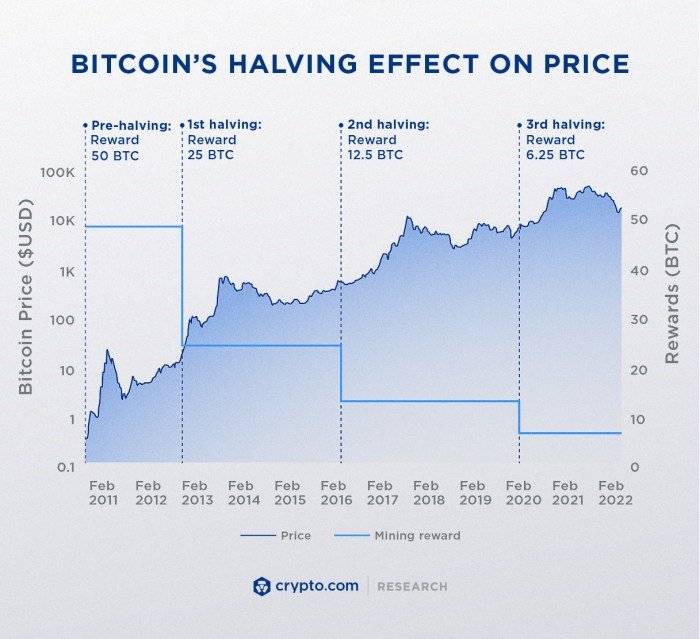
In conclusion, the future of Bitcoin hinges on a complex interplay of technological advancements, market forces, regulatory environments, and societal concerns. While the Artikel provides a framework for understanding these dynamics, it falls short of offering decisive predictions. The potential for Bitcoin to reshape finance and act as a store of value remains significant, but the path forward is uncertain and fraught with challenges.
Further analysis is needed to determine the ultimate direction and impact of Bitcoin’s evolution.
Essential Questionnaire
What are the key risks associated with Bitcoin’s increasing adoption by institutional investors?
Increased institutional investment could potentially exacerbate price volatility and create a concentration of risk within the market. It also raises concerns about the potential for regulatory pressure and market manipulation.
How might the increasing environmental concerns surrounding Bitcoin mining affect its future adoption?
The energy-intensive nature of Bitcoin mining could lead to regulatory restrictions and public pushback, potentially limiting adoption and acceptance, particularly in environmentally conscious regions.
What are the potential implications of quantum computing on Bitcoin’s security?
Quantum computing poses a significant threat to the current cryptographic methods underpinning Bitcoin’s security. This requires development of quantum-resistant cryptographic solutions to ensure the continued integrity of the network.
How can Bitcoin’s integration into the existing financial system be facilitated?
Facilitating Bitcoin’s integration requires careful consideration of regulatory frameworks, establishing clear guidelines for usage and acceptance, and mitigating potential risks associated with integrating a decentralized cryptocurrency into a centralized system.