Bitcoin Transactions: How They Work Behind the Scenes delves into the intricate mechanisms that underpin digital currency transactions. This examination explores the fundamental concepts, cryptographic safeguards, and network processes that facilitate the exchange of Bitcoin. Unlike traditional financial systems, Bitcoin transactions rely on a decentralized network, raising unique considerations about security, verification, and transaction fees.
The intricacies of Bitcoin transactions, from the creation and broadcasting of a transaction to its eventual confirmation on the blockchain, are meticulously examined. This comprehensive exploration uncovers the technical details behind the seemingly simple act of sending or receiving Bitcoin.
Introduction to Bitcoin Transactions
Bitcoin transactions are digital records of value transfers between parties on the Bitcoin network. They are fundamentally different from traditional financial transactions because they occur directly between users, bypassing intermediaries like banks. This decentralized nature is a key feature of Bitcoin.These transactions are verified and recorded on a public ledger called the blockchain, ensuring transparency and immutability. Cryptographic techniques play a crucial role in securing these transactions, protecting them from unauthorized modifications or fraudulent activities.
Fundamental Concepts of Bitcoin Transactions
Bitcoin transactions are based on the concept of digital ownership. Each transaction involves transferring ownership of a specific amount of Bitcoin from one address to another. Crucially, these addresses are public keys derived from cryptographic algorithms, allowing for secure identification and tracking of transactions.The process involves several key elements:
- Transaction Input: This represents the Bitcoin being spent in a transaction. It includes a reference to the previous transaction output that contains the Bitcoin being used. This link creates a chain of ownership and ensures that Bitcoin isn’t double-spent.
- Transaction Output: This specifies the recipient of the Bitcoin and the amount they receive. It’s also crucial for the security of the system.
- Transaction Signature: This cryptographic signature, generated by the sender, authenticates the transaction and ensures it originates from the rightful owner.
- Transaction Fees: Small amounts of Bitcoin are included in the transaction to incentivize miners to process it. This ensures that the blockchain remains secure and operational.
Role of Cryptography in Bitcoin Transactions
Cryptography is essential for the security and integrity of Bitcoin transactions. Bitcoin uses cryptographic hashing to create a unique digital fingerprint of each transaction. These hashes are used to verify the integrity of the transaction data and to ensure that no one can alter or forge a transaction without being detected.Digital signatures, created using asymmetric cryptography, further enhance security.
Bitcoin transactions are super complex, involving cryptography and distributed ledgers. They’re like a digital handshake, verified by a network of computers. If you’re facing a similar kind of challenge with insurance companies, you might find some useful advice in Big Insurance Won’t Win: Hire a Lawyer Who Fights Back. Ultimately, understanding these intricate digital processes is crucial for anyone involved in the Bitcoin world.
These signatures verify that the sender of the transaction is the legitimate owner of the Bitcoin being spent. This method ensures the transaction originates from the intended party.
Difference Between Bitcoin and Traditional Transactions
Traditional financial transactions, like wire transfers or checks, typically involve intermediaries like banks. These intermediaries process the transaction and maintain records of the transfer. Bitcoin transactions, in contrast, are peer-to-peer, meaning they occur directly between users without any intermediary.This decentralized nature of Bitcoin allows for faster and potentially cheaper transactions, although transaction fees can vary.
| Feature | Bitcoin Transactions | Traditional Financial Transactions |
|---|---|---|
| Intermediaries | No | Yes (banks, payment processors) |
| Speed | Potentially faster | Slower |
| Cost | Potentially cheaper | Higher costs associated with intermediary fees |
| Transparency | Public ledger | Usually private |
Analogy for Bitcoin Transactions
Imagine a digital record of ownership for a valuable item, like a rare coin. Each time the coin changes hands, a new record is created. This record includes details of the previous owner, the new owner, and the amount. This new record is linked to the previous one, forming a chain. Cryptographic techniques are used to secure this record, ensuring its authenticity and preventing counterfeiting.
The Bitcoin Network and Transactions

The Bitcoin network, a decentralized digital ledger, enables peer-to-peer transactions without intermediaries. This revolutionary system relies on a distributed network of computers, known as nodes, to verify and record transactions, ensuring transparency and security. This process is crucial for the network’s functionality and the integrity of Bitcoin itself.The Bitcoin network acts as a global, shared database, accessible to anyone with an internet connection.
This distributed nature is a key strength, as it makes the system resistant to censorship and single points of failure. Transactions are propagated across this network, ultimately forming a continuously growing and immutable chain of records, called the blockchain.
How the Bitcoin Network Facilitates Transactions
The Bitcoin network uses a peer-to-peer architecture, where computers (nodes) communicate directly with each other. This eliminates the need for central authorities, making the system more secure and resistant to manipulation. Nodes maintain a copy of the blockchain, enabling them to verify transactions and participate in the network’s consensus mechanism.
The Role of Nodes in Processing Transactions
Nodes play a critical role in processing Bitcoin transactions. They act as intermediaries, verifying the authenticity of transactions and ensuring their validity. These nodes validate transactions by checking the digital signatures and confirming that the sender has sufficient funds. Once verified, nodes add the transaction to the blockchain, making it permanently recorded on the network.
Creating and Broadcasting a Transaction on the Network
To initiate a transaction, a user creates a transaction message containing the sender’s address, recipient’s address, and the amount being transferred. This message is digitally signed, ensuring its authenticity. The transaction is then broadcast to the network, where nodes receive and process it. Nodes validate the transaction according to established rules and add it to the blockchain once confirmed.
Verifying and Validating Transactions
The Bitcoin network employs a complex system for verifying and validating transactions. Each node independently verifies the transaction’s details, including the sender’s balance and the digital signature’s validity. This decentralized verification process ensures that only valid transactions are added to the blockchain, maintaining the integrity of the system. Nodes use cryptographic hashes to link transactions to the previous block in the chain, ensuring immutability.
Transaction Fees and Their Purpose
Transaction fees are a crucial component of the Bitcoin network. They incentivize nodes to process transactions and ensure the efficient operation of the network. These fees are paid by the sender and are included in the transaction message. High transaction fees can lead to faster confirmation times. For example, if a user needs a transaction to be processed urgently, they can increase the fee.
This motivates nodes to prioritize processing transactions with higher fees.
Transaction Structure and Data
A Bitcoin transaction is a digital record that details the transfer of Bitcoin between addresses. These transactions are fundamental to the Bitcoin network, enabling users to send and receive cryptocurrencies. Understanding the structure and data within these transactions is crucial for comprehending how Bitcoin operates.The structure of a Bitcoin transaction is meticulously designed to ensure data integrity and security.
It follows a specific format, containing crucial information about the inputs, outputs, and other relevant details of the transaction.
Transaction Fields
Bitcoin transactions are composed of various fields, each holding specific data. These fields are crucial for verifying the transaction’s validity and ensuring its proper processing within the Bitcoin network. The table below provides a comprehensive overview of the key fields.
| Field Name | Data Type | Description |
|---|---|---|
| Version | Integer | Indicates the transaction version. A higher version often implies a more advanced or updated transaction format. |
| Input Count | Integer | Specifies the number of transaction inputs (previous transactions being used). |
| Inputs | Variable-length data | Details the previous transactions that are being spent. Includes the transaction ID and the specific output being used. |
| Output Count | Integer | Indicates the number of transaction outputs (transactions being created). |
| Outputs | Variable-length data | Specifies the recipient addresses and amounts of Bitcoin being transferred. |
| Locktime | Integer | Specifies a time after which the transaction can be processed. Useful for time-locked transactions. |
| Transaction ID (TxID) | Hash | A unique cryptographic hash that identifies the transaction uniquely within the blockchain. |
Data Types in Bitcoin Transactions
Various data types are used to represent different elements within Bitcoin transactions. This diversity of types enables the representation of various attributes, including quantities, identifiers, and other critical information. The following are some key data types:
- Integers: Used for representing quantities such as transaction versions, input/output counts, and locktimes. Examples include the number of inputs, outputs, or the transaction version number.
- Hashes: Used for unique identification of transactions and outputs. These are cryptographic hashes, guaranteeing data integrity and immutability. For instance, a transaction ID is a hash value.
- Binary Data: Used for various components within transactions. This encompasses the input and output details, such as the public keys or addresses involved in the transaction.
- Public Keys: Crucial for verifying the sender’s identity and ensuring the validity of the transaction. These are mathematical values representing the sender’s public key.
Transaction Types
Bitcoin transactions can be categorized based on their purpose. Common types include:
- Sending Transactions: These involve transferring Bitcoin from one address to another. The sender initiates the transaction, and the Bitcoin is moved to the recipient’s address.
- Receiving Transactions: These transactions involve receiving Bitcoin from another address. The recipient receives the Bitcoin transferred from the sender.
- Payment Transactions: A broad category encompassing both sending and receiving transactions, encompassing any transaction that involves the transfer of Bitcoin for goods or services. These transactions form the basis of Bitcoin’s usage as a payment system.
Cryptography and Security in Bitcoin Transactions

Bitcoin’s security relies heavily on robust cryptography. This intricate system ensures the integrity and authenticity of transactions, preventing fraud and double-spending. The underlying cryptographic principles form the bedrock of Bitcoin’s decentralized and secure nature.
Cryptographic Algorithms Used
Bitcoin transactions utilize a suite of cryptographic algorithms to guarantee security. These algorithms are carefully chosen and meticulously implemented to resist attacks and maintain the network’s integrity. The most crucial algorithms include SHA-256 for hashing and ECDSA (Elliptic Curve Digital Signature Algorithm) for digital signatures.
Digital Signatures and Transaction Verification
Digital signatures play a pivotal role in verifying the authenticity of Bitcoin transactions. Each transaction is signed using the sender’s private key. The recipient can then verify the signature using the sender’s public key, confirming the transaction originated from the claimed sender. This ensures that only the legitimate owner of the private key can authorize a transaction.
The signature also acts as a unique identifier for each transaction, preventing alterations or replay attacks.
Transaction Hashing and its Significance
Transaction hashing is a crucial step in Bitcoin’s security protocol. Each transaction is transformed into a unique, fixed-size cryptographic hash value. This hash value encapsulates all the transaction data. Any change to the transaction data will result in a drastically different hash value. This characteristic makes it incredibly difficult to alter transactions after they’ve been broadcast to the network.
The hash value is used to track and link transactions within the blockchain.
Public and Private Keys and their Role
Public and private keys are fundamental to Bitcoin security. A public key is like a unique address, allowing others to send Bitcoin to a specific account. A private key is a secret code, granting the owner exclusive access to the associated public key. These keys are mathematically linked; knowing one allows calculation of the other, but not vice-versa.
This asymmetry is crucial for secure transactions, as only the owner of the private key can authorize transactions from the associated public key. The combination of public and private keys creates a secure system of authorization and verification.
Comparison of Cryptographic Methods
| Cryptographic Method | Description | Security Strengths | Limitations |
|---|---|---|---|
| SHA-256 | A cryptographic hash function that produces a fixed-size output (hash) from any input data. | Produces unique, fixed-size hashes for any input, making it resistant to manipulation. | One-way function, meaning it’s computationally infeasible to reverse the process to obtain the original input. |
| ECDSA | An elliptic curve digital signature algorithm that provides a secure way to sign and verify digital transactions. | Provides strong authentication and non-repudiation by ensuring only the owner of the private key can sign transactions. | Relies on the security of elliptic curve cryptography. |
Transaction Confirmation and Block Chain
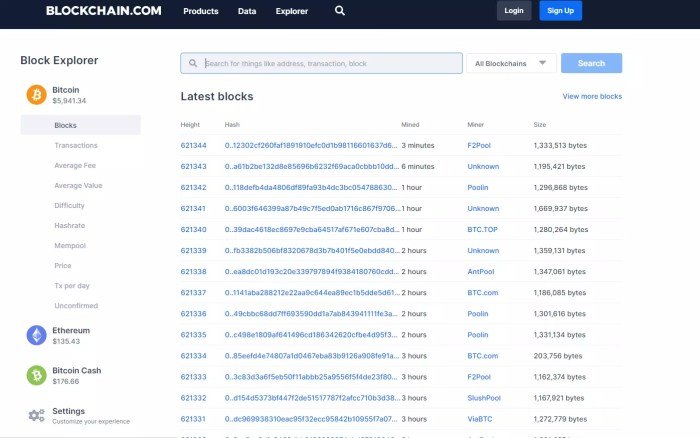
The Bitcoin network relies on a distributed ledger called the blockchain to record and verify transactions. This decentralized system ensures transparency and security, but it also requires a process for confirming transactions. Understanding this process is crucial to grasping how Bitcoin works.The confirmation process is a crucial step in Bitcoin’s transaction validation mechanism. Once a transaction is broadcast to the network, it must be included in a block, which is then added to the blockchain.
Bitcoin transactions are pretty cool, using cryptography to verify and record every move. But understanding the intricacies of these transactions also helps you grasp how things like Bitcoin Halving and Its Effect on Market Prices Bitcoin Halving and Its Effect on Market Prices play out. Ultimately, these complex systems are designed to ensure secure and transparent transactions, a core principle behind Bitcoin’s design.
The time it takes for a transaction to be confirmed depends on the network’s activity, as well as the transaction’s complexity. Confirmations signal the increasing likelihood of the transaction being irreversible.
Transaction Confirmation Process
The Bitcoin network utilizes a consensus mechanism to validate transactions. Transactions are grouped into blocks, and these blocks are added to the blockchain in a sequential manner. This sequential addition of blocks is critical to the blockchain’s integrity and immutability. This process is not instantaneous; it requires a certain number of confirmations.
Significance of Transaction Confirmations
Transaction confirmations play a vital role in the Bitcoin network’s security. A higher number of confirmations indicates a greater level of certainty that the transaction will not be reversed. For example, a transaction with six confirmations is considered significantly more secure than a transaction with only one confirmation. The process of adding transactions to blocks is not instantaneous, and the time required depends on the network’s current load.
This time period can vary depending on several factors.
Grouping Transactions into Blocks
Transactions are grouped into blocks, which act as containers for several transactions. This process involves a complex interplay of network activity and computational resources. The Bitcoin network operates on a peer-to-peer architecture, where all nodes participate in the process of adding blocks to the blockchain. This decentralized approach is a core component of Bitcoin’s security.
Miners’ Role in Validating Transactions
Miners play a critical role in validating transactions and adding them to blocks. They solve complex cryptographic puzzles to earn the right to add the next block to the blockchain. The solution to these puzzles serves as a timestamp and a unique identifier for the block. The miners who successfully solve these puzzles are rewarded with newly created Bitcoins.
Relationship Between Transactions and Blocks on the Blockchain
Transactions are the fundamental building blocks of the Bitcoin blockchain. Blocks group these transactions together, providing a historical record of all transactions. This linkage is crucial to the blockchain’s immutability. Each block contains a cryptographic hash of the previous block, forming a chain of blocks that cannot be altered without changing the hash of subsequent blocks. This immutable record is what makes Bitcoin transactions secure.
Transaction Fees and Their Impact
Bitcoin transactions, while fundamentally decentralized, require a mechanism to incentivize network participants and manage the network’s workload. Transaction fees serve this crucial role, ensuring efficient processing and confirmation of transactions. These fees are a vital component of the Bitcoin ecosystem, influencing the speed and cost of sending and receiving Bitcoin.
Purpose of Transaction Fees
Transaction fees in Bitcoin act as a payment to miners for their work in processing and adding transactions to the blockchain. Miners compete to solve complex cryptographic puzzles to validate transactions and add them to the next block. Higher fees attract miners to prioritize processing a particular transaction, increasing its chances of being included in a block sooner.
This incentivizes miners to process transactions efficiently and contribute to the security and stability of the network.
Determination and Calculation of Transaction Fees
Bitcoin transaction fees are dynamically determined by the market. The fee is specified by the sender as part of the transaction data. A higher fee offers the sender a better chance of their transaction being included in the next block, potentially leading to faster confirmation. The exact fee calculation depends on the size of the transaction. Larger transactions with more data require more computational resources, thus potentially leading to higher fees.
Software tools and online calculators often estimate the appropriate fee based on the transaction’s size and the current network congestion.
Impact of Transaction Fees on Transaction Speed and Confirmation Time
Higher transaction fees generally lead to faster transaction confirmation times. The network prioritizes transactions with higher fees, ensuring they are included in the next block mined by miners. Conversely, lower fees can lead to longer confirmation times as transactions are placed in a queue and processed according to their position in the queue. This relationship between fee and speed is dynamic, varying based on the current network congestion.
High network congestion can cause even high fees to result in slower confirmation times.
Comparison of Transaction Fees Across Different Transaction Types
Transaction fees are influenced by the transaction’s size, complexity, and data requirements. Smaller transactions tend to have lower fees compared to larger, more complex ones. For instance, a transaction sending a small amount of Bitcoin may have a significantly lower fee than one transferring a large sum or one with numerous inputs and outputs. Also, the complexity of the script involved in the transaction can affect the fee, potentially leading to higher fees for transactions involving complex smart contracts or other intricate functionalities.
Relationship Between Transaction Size, Fees, and Confirmation Time
| Transaction Size (in bytes) | Estimated Fee (in satoshis) | Estimated Confirmation Time (in blocks) |
|---|---|---|
| 100 | 100-500 | 1-5 |
| 500 | 500-2000 | 5-15 |
| 1000 | 1000-5000 | 10-30 |
| 2000 | 2000-10000 | 20-60 |
This table provides a general illustration. The exact confirmation time is influenced by network congestion and the competitive environment of miners, which is constantly changing. The fee amounts are estimates and can vary significantly depending on the circumstances.
Transaction History and Privacy
Bitcoin transactions, while publicly recorded on the blockchain, offer varying degrees of privacy. Understanding how to access transaction history and the tools available is crucial for managing your Bitcoin holdings. Methods for maintaining privacy without compromising security are also essential.
Accessing Transaction History
Viewing your Bitcoin transaction history is straightforward. Various Bitcoin wallets and explorers provide this functionality. Wallets often store a record of all your transactions, readily available within the user interface.
Tools and Resources for Viewing Transaction History
Numerous online resources, often called Bitcoin explorers, allow for detailed transaction searches. These platforms typically display transaction details, including sender and recipient addresses, amounts, timestamps, and transaction IDs. Popular explorers include Blockchain.com, Blockchair, and CoinGecko. These tools facilitate comprehensive analysis of past transactions. They can provide valuable insights for verifying transactions and tracing the movement of Bitcoin.
Privacy in Bitcoin Transactions
Bitcoin transactions are inherently transparent, recording all transaction details on the public blockchain. However, user privacy can be maintained through various strategies. A critical aspect of privacy is using unique addresses for each transaction. This separation of transactions hinders the potential linking of financial activities to specific individuals.
Protecting Transaction Privacy
While complete anonymity is challenging in Bitcoin, users can employ methods to enhance transaction privacy. One effective approach is utilizing privacy-enhancing technologies, such as CoinJoin or using mixers (often called tumblers). These services aggregate multiple transactions, obscuring individual inputs and outputs. Using a multi-signature wallet can further enhance privacy. A multi-signature wallet requires multiple parties to approve a transaction, adding an extra layer of security and privacy.
However, these methods are not foolproof, and users must carefully consider the risks and tradeoffs.
Illustration of a Typical Bitcoin Transaction History
| Transaction ID | Date | Sender Address | Recipient Address | Amount (BTC) |
|---|---|---|---|---|
| 0x123456789abcdef | 2024-03-15 10:00:00 | 3P8t35k6aZ81Jq69bY57m18s373 | AcQ414y1p91sZ58q7wG47r288y19 | 0.01 |
| 0x23456789abcdef0 | 2024-03-15 10:15:00 | AcQ414y1p91sZ58q7wG47r288y19 | 8J91w37n4Y12J569wZ75m18s373 | 0.005 |
| 0x3456789abcdef01 | 2024-03-16 09:30:00 | 3P8t35k6aZ81Jq69bY57m18s373 | M5h5t3s96t89fZ568p87r288y19 | 0.002 |
This table illustrates a simplified transaction history, showcasing the sender, recipient, date, and amount of Bitcoin transactions. Each transaction has a unique ID. Note that real-world transaction histories would include more details, like transaction fees.
Scalability and Future of Bitcoin Transactions
Bitcoin’s transaction throughput, while revolutionary, has limitations. The current system struggles to handle the growing number of transactions and the increasing demand for faster confirmation times. This presents a significant challenge to widespread adoption and further development of the cryptocurrency. Addressing these scalability issues is crucial for Bitcoin’s long-term success.
Scalability Challenges
Bitcoin’s transaction processing capacity is constrained by its design. Each block, which contains a set of transactions, can only accommodate a limited number of transactions. Consequently, transaction confirmation times can be lengthy, especially during periods of high network activity. This bottleneck directly impacts the user experience and overall usability of the network.
Proposed Solutions to Enhance Transaction Processing Capacity
Various approaches aim to alleviate the scalability issues of Bitcoin. These solutions can be broadly categorized into two primary strategies: layer-2 scaling solutions and changes to the Bitcoin protocol itself.
Layer-2 Scaling Solutions
Layer-2 scaling solutions operate on top of the Bitcoin blockchain. They provide alternative pathways for transactions to be processed and confirmed, thereby reducing the load on the main Bitcoin network. These solutions often leverage off-chain techniques to enhance transaction speed and efficiency, thus improving user experience and throughput. For example, the Lightning Network enables near-instantaneous transactions by offloading them from the main Bitcoin blockchain.
Changes to the Bitcoin Protocol, Bitcoin Transactions: How They Work Behind the Scenes
Modifying the Bitcoin protocol directly addresses the fundamental limitations of the current design. These modifications, however, often face significant resistance from the Bitcoin community due to concerns about altering the core principles of the cryptocurrency. Examples include increasing block size, implementing sharding, or adopting other techniques that potentially improve transaction processing speed.
Potential Future Developments and Improvements to Bitcoin Transaction Mechanisms
The future of Bitcoin transactions likely involves a combination of layer-2 solutions and protocol modifications. The adoption of smart contracts and decentralized applications (dApps) will also play a crucial role in shaping future transaction mechanisms. These technologies will potentially enable more complex and automated transactions. For example, a decentralized exchange (DEX) could facilitate automated trading based on smart contract agreements.
Emerging Trends in Bitcoin Transaction Technology
The emerging trend involves a shift towards more efficient and scalable transaction processing methods. The emphasis is on finding a balance between maintaining the security and decentralization of the Bitcoin network and accommodating increasing transaction volumes. The Lightning Network, for instance, embodies this trend by enabling faster and cheaper transactions without compromising the underlying blockchain’s security.
Table Outlining Potential Solutions for Scaling Bitcoin Transactions
| Solution Category | Description | Potential Benefits | Potential Drawbacks |
|---|---|---|---|
| Layer-2 Scaling | Off-chain transaction processing on top of Bitcoin | Increased transaction throughput, reduced confirmation times | Potential for centralization if not properly designed, security risks |
| Protocol Modifications | Changes to Bitcoin’s core design | Increased transaction capacity, potentially faster confirmations | Requires significant community consensus, risk of altering core principles |
| Smart Contracts & dApps | Integration of smart contracts for complex transactions | Automation, reduced reliance on intermediaries | Increased complexity, potential security vulnerabilities |
Final Summary: Bitcoin Transactions: How They Work Behind The Scenes
In conclusion, Bitcoin transactions, while seemingly complex, operate on a foundation of cryptography, decentralized networks, and meticulous verification processes. Understanding these mechanisms is crucial for anyone seeking to navigate the digital currency landscape. The future of Bitcoin transactions hinges on ongoing innovations in scalability and security. This in-depth exploration has provided a comprehensive overview of the underlying structure and function of these transactions, setting the stage for further exploration of related technologies.
Q&A
What are the typical transaction fees for Bitcoin?
Transaction fees for Bitcoin vary significantly depending on factors such as transaction size, network congestion, and desired confirmation time. Generally, lower fees result in slower confirmation times, while higher fees expedite the process. The network dynamically adjusts fees based on demand.
How can I protect my Bitcoin transaction privacy without sacrificing security?
Protecting Bitcoin transaction privacy while maintaining security involves careful consideration of mixing services and utilizing privacy-focused wallets. These methods aim to obfuscate transaction details without compromising the security mechanisms inherent in the Bitcoin network.
What are the common data types used in Bitcoin transactions?
Bitcoin transactions utilize various data types, including integers for amounts, strings for addresses, and cryptographic hashes for security. Specific data types vary depending on the type of transaction. A comprehensive understanding of these data types is essential for interpreting Bitcoin transaction details.
What are the limitations of current Bitcoin transaction scalability?
Current Bitcoin transaction scalability is limited by the block size and the processing capacity of the network. Solutions are constantly being explored, including layer-2 scaling solutions and alternative blockchains, to overcome these limitations.