Bitcoin and the Metaverse: Future of Digital Assets explores the revolutionary intersection of these two transformative technologies. Bitcoin, the pioneering cryptocurrency, offers a decentralized and secure payment system, while the Metaverse promises immersive virtual worlds. This exploration delves into how Bitcoin can power transactions, secure digital assets, and potentially reshape the very fabric of online interaction.
From the fundamental principles of Bitcoin to the potential for decentralized economies within the Metaverse, this analysis examines the opportunities and challenges presented by this convergence. The analysis includes a detailed examination of potential economic and societal impacts, security considerations, and the integration of emerging technologies.
Introduction to Bitcoin and the Metaverse

Yo, fam! Bitcoin and the Metaverse—two totally different worlds, right? But they’re starting to intertwine in ways we never thought possible. It’s like a digital revolution, where virtual lands and cryptocurrencies are about to shake things up. Let’s dive in and see what’s cookin’!
Bitcoin’s Fundamental Principles
Bitcoin is a decentralized digital currency, meaning it’s not controlled by any single entity like a bank. It relies on blockchain technology, a distributed ledger that records every transaction transparently and securely. Think of it like a digital spreadsheet that everyone can see, but nobody can tamper with. This makes transactions verifiable and trustless. Crucially, Bitcoin’s supply is limited, which some argue contributes to its value.
Core Concepts of the Metaverse
The Metaverse is a shared virtual world, kind of like a giant online playground. Imagine virtual real estate, avatars, and digital experiences all connected. People can interact, socialize, and even work in this virtual space. Potential applications range from virtual concerts to online shopping, even virtual offices. It’s a whole new way to interact and experience the world, potentially blurring the lines between the physical and digital.
Historical Context of Bitcoin and the Metaverse
Bitcoin emerged in 2009, as a response to the 2008 financial crisis. It aimed to create a more transparent and decentralized financial system. The Metaverse, on the other hand, is a concept that’s been around for a while, evolving from early virtual reality experiments to today’s immersive platforms. Early adopters are seeing the potential for revolutionary use cases.
Intersection of Bitcoin and the Metaverse
The intersection of these two technologies is sparking a lot of excitement. Bitcoin’s decentralized nature aligns well with the Metaverse’s focus on freedom and self-determination in the digital sphere. Imagine buying virtual land with Bitcoin, or using cryptocurrencies to pay for virtual goods and services within a Metaverse platform. It’s a wild combination.
Potential Future Impact
| Technology | Application | Economic Impact | Societal Impact |
|---|---|---|---|
| Blockchain | Secure transactions in virtual worlds, creation of NFTs, virtual land ownership. | New economic models for virtual assets, potential for new businesses and jobs. | Increased access to digital ownership and communities, new forms of creativity and expression. |
| Cryptocurrencies | Payment for virtual goods, services, and experiences in the Metaverse. | Decentralized financial systems in virtual spaces, alternative to traditional payment systems. | Potential for greater financial inclusion, empowerment of users in the virtual world. |
| Virtual Reality/Augmented Reality | Immersive experiences within the Metaverse, enhanced interactions with virtual environments. | New revenue streams for businesses, new possibilities for entertainment and education. | New ways to socialize and interact, blurring lines between physical and digital worlds. |
This table highlights the diverse ways these technologies are intertwining, potentially creating a new paradigm for the digital world.
Bitcoin’s Role in Metaverse Transactions
Yo, peeps! Bitcoin’s not just for buying ramen anymore. It’s getting ready to be a major player in the metaverse, the digital world we’re all about to enter. Imagine buying virtual land, clothes, or even experiences using Bitcoin – it’s a whole new level of digital commerce. Let’s dive into how Bitcoin is gonna shake things up in this virtual realm.Bitcoin’s decentralized nature and fast transaction times make it a strong contender for metaverse transactions.
It offers a secure and efficient alternative to traditional payment methods, cutting out middlemen and simplifying the process for everyone. This decentralized structure makes it more resistant to censorship and control, something that’s super important in a virtual world where users might want more control over their digital assets.
Bitcoin’s Security and Efficiency in Metaverse Transactions
Bitcoin’s blockchain technology provides a secure and transparent record of transactions. This means that every transaction in the metaverse, from buying virtual land to purchasing digital art, is recorded and verifiable by anyone on the network. This eliminates the need for intermediaries, reducing costs and increasing the speed of transactions. The immutable nature of the blockchain makes it extremely hard to tamper with transactions, further bolstering its security.
This trustless nature is especially attractive in the metaverse where trust can be a challenge.
Use Cases for Bitcoin in Metaverse Economies, Bitcoin and the Metaverse: Future of Digital Assets
Bitcoin’s versatility extends beyond just simple transactions in the metaverse. It can power a whole range of economic activities. Imagine buying virtual real estate, purchasing digital art, or even using it as a reward system for participating in metaverse games. These digital assets are becoming increasingly valuable and desirable, and Bitcoin facilitates their smooth exchange. This includes everything from virtual concerts and events to digital fashion and collectibles.
The applications are endless!
- Virtual Real Estate: Buying and selling virtual plots of land in metaverse worlds. Imagine owning a piece of digital land in a thriving virtual city and collecting rent from users who want to build their digital homes there.
- Digital Art and Collectibles: Purchasing and selling digital art and collectibles. The uniqueness of these assets is matched by the security of Bitcoin’s transactions. This provides a safe way for artists to sell their work and collectors to acquire rare digital items.
- In-Game Currency: Using Bitcoin as the primary currency within metaverse games. This allows players to easily earn and spend virtual currency without needing to rely on in-game currencies that can be volatile.
Advantages of Bitcoin over Traditional Payment Methods
Traditional payment systems often rely on intermediaries, which can introduce delays and fees. Bitcoin, being decentralized, cuts out these middlemen, resulting in faster and cheaper transactions. It also offers enhanced security, reducing the risk of fraud and theft compared to traditional methods. This makes Bitcoin a compelling choice for metaverse users who value speed, security, and cost-effectiveness.
Bitcoin Transaction Speed and Cost Comparison
| Payment Method | Transaction Speed (Average) | Transaction Cost (Average) |
|---|---|---|
| Bitcoin | 10-60 minutes | $0.0001 – $10 (USD) |
| Visa/Mastercard | Real-time to few business days | $0.30 – $5 (USD) |
| PayPal | Real-time to few business days | $0.30 – $5 (USD) |
Note: Transaction times and costs can vary based on network congestion and other factors.
Conceptual Model of a Bitcoin-Based Metaverse Transaction
Imagine a user in the metaverse wants to buy a virtual piece of land. They use a metaverse wallet to send Bitcoin to the seller’s wallet. The transaction is recorded on the Bitcoin blockchain, making it secure and transparent. The seller receives the Bitcoin, and the ownership of the virtual land is transferred to the buyer. This is a simplified representation, but it illustrates the fundamental process.
Digital Assets in the Metaverse Ecosystem
Yo, peeps! The Metaverse is about to blow up, and digital assets are gonna be the currency of the future. Imagine owning a virtual piece of land, a cool avatar, or even a digital artwork – all backed by the rock-solid foundation of Bitcoin. It’s a whole new digital frontier, and we’re about to dive deep into the nitty-gritty of these digital treasures.
Types of Digital Assets in the Metaverse
The Metaverse is a massive playground for all sorts of digital assets. From virtual real estate to collectible items, the possibilities are endless. Think of it like a digital mall, but instead of physical goods, you’re buying and selling virtual stuff.
- Virtual Land: Imagine owning a plot of land in a virtual world. This land could be used for building houses, shops, or even entire cities. Think Decentraland or Sandbox – virtual worlds where you can buy and sell land, just like you do with real estate in the real world.
- Collectibles: NFTs (Non-Fungible Tokens) are taking the digital world by storm. They represent unique digital items, like virtual art, collectibles, and even in-game items. Imagine owning a rare digital painting or a limited-edition virtual pet – all authenticated and secure with Bitcoin.
- Avatars: Your digital representation in the Metaverse is your avatar. You can customize your avatar with clothes, accessories, and even special abilities. Imagine owning a unique avatar with special powers or exclusive features, secured with Bitcoin.
- In-Game Items: Video games are getting more immersive, and in-game items are becoming more valuable. Imagine owning a powerful weapon or a rare collectible item in a metaverse game, all secured by Bitcoin.
Creating Virtual Assets with Bitcoin
Bitcoin’s decentralized nature makes it perfect for securing ownership of digital assets in the Metaverse. Using blockchain technology, each digital asset can be uniquely identified and tracked, ensuring that only the rightful owner has access.
- Virtual Land: You can buy and sell virtual land using Bitcoin, just like you buy and sell real estate with real money. This ensures transparency and security in transactions.
- Collectibles: NFTs are often built on blockchains like Ethereum, which can be integrated with Bitcoin. This enables the secure and transparent transfer of ownership of digital collectibles.
- Avatars: Avatars can be customized and equipped with virtual items, and these items can be bought and sold using Bitcoin. This allows for a more personalized and engaging experience in the Metaverse.
Challenges and Opportunities in Regulating Digital Assets
The rapid evolution of digital assets in the Metaverse presents both challenges and opportunities for regulation. One major hurdle is defining what constitutes a digital asset and how it should be treated under the law.
- Defining Ownership: The concept of ownership in a virtual world needs to be clearly defined. This includes the rights and responsibilities of owners regarding their digital assets.
- Intellectual Property: The protection of intellectual property rights in the Metaverse is crucial, but it also presents unique challenges, particularly regarding virtual creations.
- Taxation: The taxation of digital assets in the Metaverse is a new area, and it’s important to develop a clear framework to address this.
Different Types of Digital Assets
This table illustrates various digital assets, their properties, and their potential applications in the Metaverse.
| Digital Asset Type | Properties | Potential Applications |
|---|---|---|
| Virtual Land | Unique location, customizable | Building homes, shops, virtual cities |
| NFTs (Collectibles) | Unique, verifiable ownership | Virtual art, in-game items, collectibles |
| Avatars | Personalized representation | Customization, interaction, representation in the Metaverse |
Scarcity and Ownership with Bitcoin
Bitcoin’s scarcity and immutable nature make it ideal for implementing scarcity and ownership in the Metaverse. Each transaction is recorded on the blockchain, ensuring that ownership is verifiable and secure. This is crucial for building trust and confidence in the digital economy. Think of Bitcoin as the digital gold standard, ensuring that digital assets are truly unique and valuable.
Bitcoin’s decentralized nature ensures transparency and security in ownership, making it a reliable foundation for virtual asset transactions.
Security and Privacy Concerns
Gak heran sih, kalo di Metaverse yang penuh dengan aset digital, keamanan dan privasi jadi hal penting banget. Bayangin aja, transaksi Bitcoin di dunia virtual ini bisa jadi sasaran empuk buat para hacker, terus data pribadi kita juga bisa bocor. Kita perlu waspada banget, bro.
Potential Security Risks of Using Bitcoin in the Metaverse
Bitcoin transactions in the Metaverse, while offering potential for exciting new experiences, bring significant security risks. The decentralized nature of Bitcoin, while a strength in some contexts, can also be a vulnerability if not handled properly. Malicious actors can exploit vulnerabilities in the Metaverse platform or Bitcoin wallets to steal digital assets. Phishing attacks, where users are tricked into revealing their login credentials, are a major concern.
Also, the anonymity associated with Bitcoin transactions can sometimes be misused by those who want to conceal illegal activities.
Privacy Concerns Surrounding Digital Assets and Transactions
Privacy in the Metaverse is a complex issue. While Bitcoin’s blockchain is transparent, individual transactions are linked to public addresses. This public record can reveal a user’s spending habits, potentially exposing sensitive information. If your Bitcoin wallet address is associated with sensitive information, such as a real-world identity, then this information is directly exposed to everyone on the blockchain.
This raises concerns about potential misuse of personal data. For example, your spending habits in the Metaverse could be linked to your real-world identity, opening you up to unwanted attention or discrimination.
Strategies for Enhancing Security and Privacy
To mitigate these risks, strong security protocols and user awareness are crucial. Implementing multi-factor authentication (MFA) for wallets and accounts can add an extra layer of security. Regularly updating software and using strong passwords are also vital. Users should be educated on common scams and phishing techniques. The Metaverse platforms themselves need robust security measures, including secure coding practices and regular security audits.
The more users are informed, the more they can protect themselves.
Security Protocols for Bitcoin-Based Transactions
Secure transactions in the Metaverse require advanced security protocols for Bitcoin. These protocols should include encryption of sensitive data during transmission and storage. Using hardware wallets to store Bitcoin can greatly enhance security by isolating private keys from the internet. Utilizing secure channels for transactions, like secure socket layers (SSL), is a must. Thorough security audits for both the Bitcoin network and Metaverse platforms are critical to identifying and patching potential vulnerabilities.
Table of Potential Threats and Mitigation Strategies
| Potential Threat | Mitigation Strategy |
|---|---|
| Phishing Attacks | User education on phishing tactics, multi-factor authentication, secure login practices |
| Malware Attacks | Regular software updates, use of reputable platforms, secure wallets, antivirus software |
| Exploiting Vulnerabilities | Regular security audits of Metaverse platforms and Bitcoin wallets, bug bounty programs, secure coding practices |
| Data Breaches | Encryption of data, strong passwords, MFA, secure storage solutions |
| Privacy Concerns | Anonymization techniques, decentralized identity solutions, user control over data |
Potential for Decentralization and Community
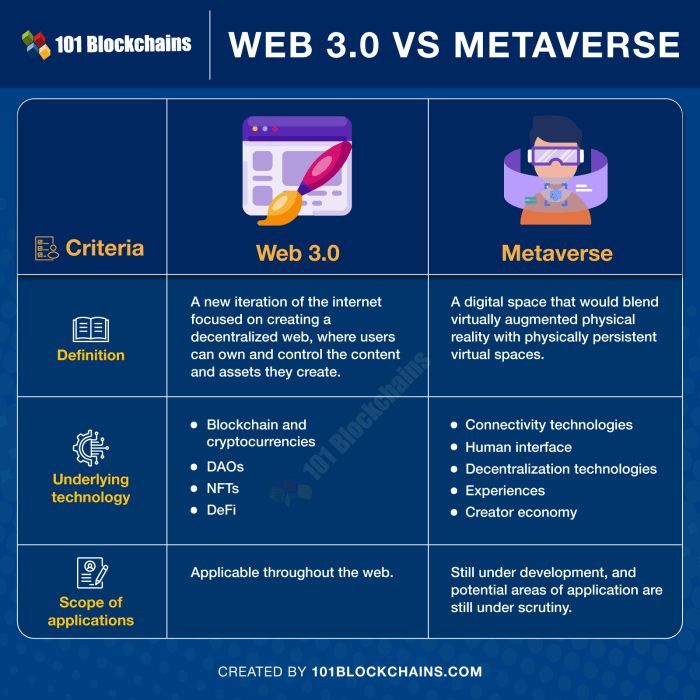
Bitcoin’s decentralized nature is a major draw for many, and this potential can extend to the Metaverse. Imagine a digital world where power isn’t concentrated in a few hands, but distributed amongst users, all fueled by Bitcoin. This could lead to a more democratic and innovative Metaverse experience, far from the centralized structures we see today.The future of Bitcoin-powered Metaverse economies will be heavily influenced by the communities that build within them.
Strong, engaged communities can drive innovation, shape the direction of these digital worlds, and ultimately create a more vibrant and thriving environment for everyone. Think of it like a massive, virtual town hall where everyone has a voice and can contribute to shaping the future.
Bitcoin’s Role in Fostering Decentralization
Bitcoin’s core design principle of decentralization naturally lends itself to the Metaverse. The blockchain’s transparent and immutable nature ensures that all transactions and interactions are recorded and verifiable, fostering trust and reducing the risk of manipulation. This transparency can lead to greater accountability and fairness within the Metaverse’s economy, especially when it comes to digital land ownership, in-game assets, and other forms of digital property.
Communities Shaping Bitcoin-Powered Metaverse Economies
Communities play a crucial role in the development and success of Bitcoin-powered Metaverse economies. They provide a platform for users to connect, collaborate, and share ideas, driving innovation and shaping the future of these digital worlds. Active communities can contribute to the creation of unique and valuable experiences, ensuring that the Metaverse is not just a digital space, but a vibrant community hub.
Decentralized Governance Models in the Metaverse
Implementing decentralized governance models in the Metaverse using Bitcoin can involve various mechanisms. One possibility is a system where users hold Bitcoin-backed tokens representing their participation and voting rights within the Metaverse. These tokens can be used to influence decisions about the Metaverse’s development, from determining the rules of engagement to deciding on new features. This approach ensures that users have a direct say in the direction of the Metaverse, creating a more inclusive and democratic environment.
Incentivizing Participation and Contribution
Incentivizing participation and contribution in the Metaverse is crucial for its long-term success. A variety of mechanisms can be employed, such as rewarding users with Bitcoin or Bitcoin-based tokens for contributing to the Metaverse’s development, creating unique digital assets, or building valuable communities. This can range from simple token rewards to more complex systems based on contribution scores and reputation within the community.
Think of it like a virtual reward system, encouraging participation and fostering a sense of ownership among users.
Decentralized vs. Centralized Metaverse Models
| Feature | Decentralized | Centralized |
|---|---|---|
| Ownership | Distributed among users | Concentrated in the hands of a few entities |
| Governance | Participatory and democratic | Authoritarian and top-down |
| Innovation | Driven by community participation | Limited to the vision of the central authority |
| Security | Enhanced through blockchain technology | Potentially vulnerable to single points of failure |
| Transparency | Full transparency through blockchain records | Potentially opaque due to centralized control |
This table highlights the key differences between decentralized and centralized models in the Metaverse, demonstrating how Bitcoin-based systems can promote greater user empowerment and innovation.
Technological Advancements and Integration
Bitcoin and the Metaverse are like two peas in a pod, ready to explode with innovative potential. Emerging tech is paving the way for seamless integration, unlocking a whole new world of possibilities. Imagine buying a virtual Gucci bag in the Metaverse with Bitcoin, or even renting a digital plot of land using a crypto payment system. The possibilities are truly endless.
Emerging Technologies Enhancing Integration
The future is looking bright for merging Bitcoin with the Metaverse. New technologies like improved blockchain scalability solutions, decentralized autonomous organizations (DAOs), and non-fungible token (NFT) standardization are key drivers. These advancements will allow for more efficient transactions, greater security, and a more user-friendly experience within the Metaverse.
My friend, the digital realm of Bitcoin and the Metaverse promises a fascinating future for digital assets. But, as with any valuable asset, securing these digital treasures is paramount. Knowing how to store Bitcoin safely, choosing the right wallet options, is key to maintaining your holdings, like a devout follower guarding their faith. How to Store Bitcoin Safely: Best Wallet Options will guide you through the different options available.
Ultimately, safeguarding these digital riches will be crucial as the Metaverse continues to evolve and Bitcoin’s value grows, enabling us to fully participate in this digital age.
Blockchain’s Revolutionizing Role in the Metaverse
Blockchain technology is set to transform the Metaverse in many ways. It can establish verifiable ownership of digital assets, ensuring transparency and trust. Imagine a digital land deed recorded on a blockchain, eliminating the risk of fraud or disputes. This trust and transparency are critical to building a thriving Metaverse ecosystem.
The digital realm, with Bitcoin and the Metaverse, promises a future of ownership and interaction. But understanding the mechanics behind Bitcoin’s creation is key. To truly grasp the digital assets of tomorrow, we must first delve into how Bitcoin is mined. This process, explained in detail at Bitcoin Mining Explained: How It Really Works , is fundamental to comprehending the value and potential of this evolving digital landscape.
Ultimately, this knowledge is crucial for navigating the future of digital assets and the promises of the Metaverse.
Bitcoin Integration with Metaverse Platforms
Bitcoin can be integrated into various Metaverse platforms through smart contracts. These contracts automate transactions, making the process frictionless. For example, a user could buy virtual land in Decentraland using Bitcoin, with the transaction automatically recorded on the blockchain. This integration promises to streamline the user experience.
Interoperability Between Bitcoin and Other Blockchains
Interoperability is crucial for seamless interaction between different blockchain networks. This allows users to transfer assets between platforms without issues. Imagine a user transferring a Bitcoin-based NFT from one Metaverse platform to another. A lack of interoperability would create a fragmented ecosystem, hindering growth. Standards like the Universal Transfer Protocol (UTP) and the use of bridge mechanisms are crucial for solving these issues and enhancing the user experience.
Flowchart: Integrating Bitcoin-based Digital Assets into a Metaverse Platform
| Step | Description |
|---|---|
| 1 | User selects a Bitcoin-based digital asset (e.g., NFT) on an external Bitcoin wallet. |
| 2 | User initiates a transaction using a compatible wallet or interface within the Metaverse platform. |
| 3 | Smart contract on the Metaverse platform processes the transaction. |
| 4 | The Metaverse platform verifies the transaction on the Bitcoin blockchain. |
| 5 | The digital asset is transferred to the user’s Metaverse account, and the transaction is recorded on the platform’s blockchain. |
| 6 | The user can now utilize the digital asset within the Metaverse. |
Economic and Societal Impacts: Bitcoin And The Metaverse: Future Of Digital Assets
The convergence of Bitcoin and the Metaverse is poised to reshape the digital economy and society in ways we’re only starting to imagine. This intersection offers exciting opportunities for economic growth and innovation, but also potential challenges that need careful consideration. Imagine a world where digital assets are as valuable as physical ones, and transactions are seamless across different virtual worlds.
This is the potential future we’re talking about.
Potential Economic Implications
The integration of Bitcoin into the Metaverse promises a revolution in digital commerce. Imagine buying virtual land, avatars, or experiences with Bitcoin, eliminating traditional payment gateways and friction. This could lead to a significant increase in digital transactions, boosting the cryptocurrency market and potentially driving economic growth in related sectors. The decentralized nature of Bitcoin could also reduce reliance on centralized financial institutions, potentially empowering individuals and communities.
Societal Impacts of a Bitcoin-Integrated Metaverse
A Bitcoin-integrated Metaverse could foster new forms of social interaction and community building. Users could connect and collaborate across geographical boundaries, fostering global communities around shared interests and activities. The anonymity offered by Bitcoin could encourage free expression and participation in virtual spaces, although this also presents potential risks regarding misuse. The Metaverse could also provide new opportunities for marginalized communities to participate in the digital economy.
New Job Markets and Industries
The convergence of these two technologies will create entirely new job markets. Think about developers specializing in Metaverse experiences built on Bitcoin, designers crafting unique digital assets backed by Bitcoin, and transaction facilitators connecting physical and virtual economies. The potential for entrepreneurship in this space is immense, opening doors for creators, developers, and entrepreneurs alike. This will require new skill sets and training opportunities.
Challenges and Opportunities for Developing Countries
Developing countries could benefit significantly from this convergence, gaining access to global markets and opportunities that were previously inaccessible. However, challenges remain in terms of digital infrastructure, financial literacy, and access to technology. Governments and organizations will need to address these issues to ensure that the benefits of this technology are distributed fairly and equitably. Bridging the digital divide is crucial for inclusive participation.
Predicted Economic Impacts by Sector
| Sector | Potential Impacts |
|---|---|
| E-commerce | Increased transaction volume, reduced transaction fees, emergence of new virtual marketplaces. Think of virtual storefronts and digital boutiques. |
| Gaming | Increased value of in-game items, new revenue streams for developers, immersive gaming experiences. Imagine virtual land and avatar auctions using Bitcoin. |
| Real Estate | Emergence of virtual real estate, new investment opportunities, increased property value. Consider virtual plots of land and homes in the Metaverse. |
| Art and Collectibles | New ways to create, sell, and own digital art, emergence of virtual art galleries, potentially higher value for digital assets. Think of exclusive NFTs and digital paintings. |
| Finance | Reduced reliance on intermediaries, increased access to financial services, decentralized finance (DeFi) opportunities. Consider peer-to-peer lending and borrowing in virtual worlds. |
Illustrative Examples and Case Studies
Gue mau bahas contoh-contoh nyata gimana Bitcoin bisa dipake di Metaverse. Bayangin, transaksi di dunia virtual yang super aman dan efisien, kayak beli barang di mall online, tapi pake Bitcoin. Ada beberapa project yang udah coba, ada yang sukses, ada juga yang gagal. Kita liat aja gimana ceritanya.Nah, di sini kita bakal ngeliat beberapa contoh project Metaverse yang pake Bitcoin.
Dari yang simple sampai yang kompleks, kita bakal bahas gimana cara kerjanya, dan apa pelajaran yang bisa kita ambil. Semoga bisa ngebantu lo ngerti lebih dalam lagi.
Bitcoin-Powered Metaverse Project Examples
Beberapa project udah nyoba integrasi Bitcoin ke Metaverse. Misalnya, ada marketplace virtual yang pake Bitcoin buat jual beli aset digital. Pengguna bisa beli land, avatar, atau item lainnya pake Bitcoin langsung. Ini ngebuka peluang baru buat ekonomi digital.
Innovative Applications of Bitcoin in the Metaverse
Bitcoin bisa dipake buat bayar jasa di Metaverse, misalnya buat sewa tempat virtual, atau hire avatar dengan skill khusus. Bayangin, lo bisa sewa seorang avatar desainer buat mendesain rumah virtual lo pake Bitcoin! Ini juga bisa buat sistem reward buat user aktif di Metaverse. Misalnya, poin loyalitas yang bisa ditukarin dengan Bitcoin.
Case Studies of Successful Implementations
Meskipun banyak yang mencoba, belum banyak project Metaverse yang benar-benar sukses secara besar-besaran. Sukses di sini bukan cuma soal revenue, tapi juga soal user adoption dan sustainability. Banyak project yang mati karena kurangnya adopsi dari pengguna.
Case Studies of Failed Implementations
Ada juga beberapa project yang gagal. Salah satu penyebabnya adalah masalah teknis atau kurangnya edukasi ke pengguna. Mungkin juga sistem yang terlalu rumit buat dipake. Ada juga project yang gagal karena tidak mampu menarik perhatian pengguna, jadi tidak ada cukup banyak orang yang mau menggunakannya.
Table of Case Studies (Hypothetical)
| Project Name | Description | Outcome |
|---|---|---|
| Bitcoin-based Virtual Real Estate Marketplace | A marketplace where users can buy and sell virtual land using Bitcoin. | Failed due to low user adoption and lack of strong community engagement. |
| Bitcoin-powered Avatar Customization Service | A service where users can customize their avatars with Bitcoin-paid items. | Successful in limited scale, demonstrating the potential but needing wider adoption. |
| Bitcoin-based Metaverse Gaming Platform | A game where players earn and spend Bitcoin for in-game assets. | Ongoing, with moderate user base, but facing challenges in sustaining long-term engagement. |
Final Conclusion
In conclusion, Bitcoin and the Metaverse: Future of Digital Assets present a dynamic interplay of technological advancements and societal implications. The potential for decentralized economies, secure transactions, and new digital asset classes is immense. However, careful consideration of security concerns, regulatory frameworks, and the potential for unintended consequences is crucial. The future of digital assets is inextricably linked to the successful integration of Bitcoin and the Metaverse.
User Queries
What are some potential security risks of using Bitcoin in the Metaverse?
Potential security risks include scams, hacking, and phishing attempts targeting users within the Metaverse. Protecting personal wallets and assets from unauthorized access is paramount.
How might Bitcoin foster decentralization within the Metaverse?
Bitcoin’s decentralized nature could empower users by reducing reliance on centralized platforms and allowing for greater control over digital assets.
What are the different types of digital assets that could be created and traded within the Metaverse?
Digital assets could include virtual land, avatars, collectibles, and in-world tokens, each with varying properties and potential applications.
What are the potential economic implications of Bitcoin integration in the Metaverse?
Integration could lead to new markets, job opportunities, and potential economic growth within the virtual economy. However, potential risks and challenges are also evident.